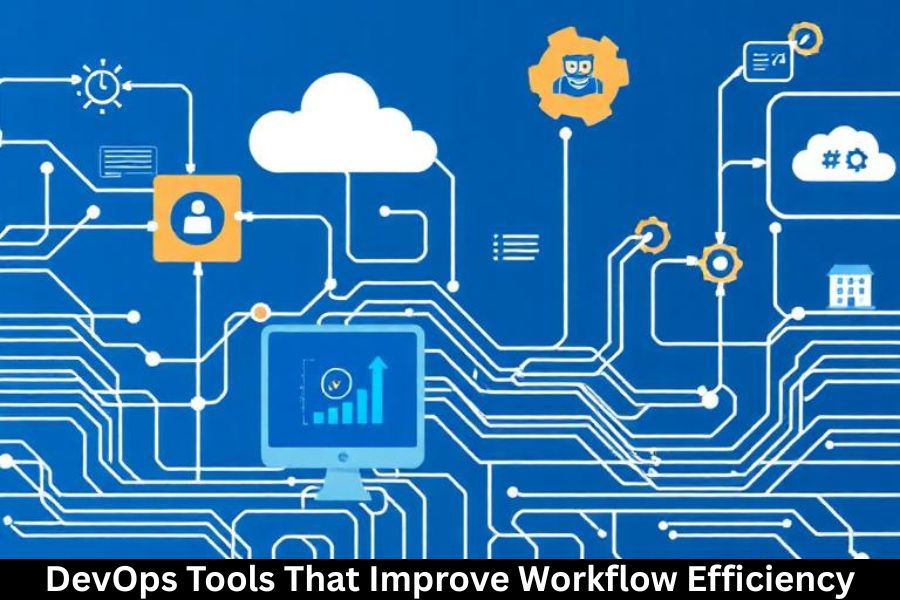
DevOps is no longer just a buzzword—it’s a culture, a mindset, and a highly effective workflow strategy that brings development and operations teams together. With the right DevOps tools in place, teams can reduce bottlenecks, eliminate manual errors, speed up deployments, and maintain consistent performance.
What DevOps Truly Means Today
Today, DevOps represents collaboration, automation, continuous improvement, and a shared responsibility mindset. Instead of separating development and operations, the DevOps model blends them into a streamlined, well-coordinated pipeline.
Why Workflow Efficiency Matters
When workflows lag, everything slows down—deployments, testing, decision-making, and ultimately, business growth. Efficient workflows mean:
- Faster releases
- Fewer bugs
- Higher stability
- Happier teams and customers
And that’s exactly where DevOps tools make all the difference.
Core Areas Where DevOps Tools Improve Efficiency
Collaboration & Communication
DevOps thrives on real-time collaboration. Tools that enable conversation, project management, and instant feedback reduce delays and confusion.
Automation
Why waste time on repetitive tasks? Automation improves consistency, reduces human errors, and eliminates unnecessary manual effort.
Monitoring & Feedback Loops
Continuous monitoring tools allow teams to catch issues early and refine their processes before problems escalate.
Top DevOps Tools for Improved Workflow Efficiency
1. Git — Version Control Made Simple
Git remains the backbone of modern development.
Key Features
- Branching and merging
- Distributed version control
- Easy collaboration
How Git Enhances Workflow Efficiency
It ensures developers never overwrite each other’s code and allows multiple people to work simultaneously without conflicts.
2. Jenkins — Automating Repetitive Tasks
Jenkins is one of the most reliable and popular automation servers.
Key Features
- Massive plugin ecosystem
- Build automation
- Continuous integration
Why Jenkins Remains a DevOps Favorite
It allows you to automate pipelines end-to-end, reducing manual build and deployment work.
3. Docker — Simplifying Containerization
Docker revolutionized the way apps are packaged and shipped.
Key Features
- Lightweight containers
- Portable environments
- Faster deployment times
How Docker Speeds Up Deployment
Developers can ensure their applications work the same across all systems, avoiding “it works on my machine” scenarios.
4. Kubernetes — The King of Container Orchestration
For managing containers at scale, Kubernetes leads the industry.
Key Features
- Auto-scaling
- Load balancing
- Self-healing systems
Improving Workflow with Kubernetes
It automates deployment and scaling complexities so teams can focus on development rather than management.
5. Ansible — Configuration Management Made Easy
Ansible uses simple YAML scripts to automate configurations.
Key Features
- Agentless architecture
- Easy-to-write playbooks
- Fast automation
Enhancing Efficiency with Ansible
Instead of configuring dozens of servers manually, teams can do it in minutes using Ansible scripts.
6. Terraform — Infrastructure as Code (IaC)
Terraform makes infrastructure provisioning predictable and repeatable.
Key Features
- Cloud-agnostic
- Declarative syntax
- Automated provisioning
Why Terraform Is a Must-Have Tool
It helps teams manage infrastructure with version control, reducing errors and ensuring consistency.
7. Prometheus — Real-Time Monitoring
Prometheus is perfect for tracking application performance.
Key Features
- Time-series database
- Custom alerts
- Easy integration with Kubernetes
Boosting Efficiency Using Monitoring Insights
Quick insights mean faster fixes and fewer outages.
8. Grafana — Turning Data Into Visual Insights
Grafana complements Prometheus by visualizing data beautifully.
Key Features
- Dashboards
- Real-time analytics
- Multi-data-source support
How Grafana Helps Teams Act Faster
Clear visuals help teams identify issues instantly without digging through logs.
9. Slack — Communication for High-Speed Teams
Slack streamlines communication inside DevOps teams.
Key Features
- Channels
- Integrations
- Real-time messaging
How Slack Enhances DevOps Collaboration
It reduces email clutter and keeps everyone updated instantly.
10. Jira — Tracking, Planning & Improving Workflow
Jira is widely used for agile and DevOps planning.
Key Features
- Kanban boards
- Sprint planning
- Integration with CI/CD tools
Why Jira Works Well with DevOps Pipelines
It helps teams plan efficiently, track progress, and detect roadblocks early.
How to Choose the Right DevOps Tools
Understanding Team Size & Requirements
Small teams need lightweight tools, while enterprises require scalable solutions.
Integration Capabilities
Choose tools that work well together to avoid breaking the workflow.
Scalability & Long-Term Growth
Select tools that grow with your business instead of limiting your processes.
Common Mistakes to Avoid
Adding Too Many Tools
More tools ≠ more efficiency. Sometimes they just create confusion and fragmentation.
Ignoring Automation Opportunities
If you’re still doing manual tasks, you’re slowing yourself down.
Poor Documentation Habits
Without documentation, troubleshooting becomes a nightmare.
The Future of DevOps Efficiency
AI-Driven Automation
AI is already helping teams predict failures, optimize pipelines, and automate workflows.
Predictive Monitoring Tools
Future monitoring solutions will detect anomalies long before they happen.
Conclusion
DevOps tools are essential for building efficient, smooth, and scalable workflows. Whether your team wants faster deployment, better collaboration, or improved monitoring, the right tools can transform your entire development lifecycle. By choosing wisely and optimizing usage, you’ll not only speed up delivery but also enhance product quality and team satisfaction.
FAQs
1. What is the most essential DevOps tool?
Git is arguably the most essential since it handles version control for all codebases.
2. Is Docker required for DevOps?
While not required, Docker streamlines deployments and environments, making it extremely valuable.
3. Can small teams use Kubernetes?
Yes, but only if they need container orchestration. Small apps may not need Kubernetes initially.
4. Which monitoring tool is best for beginners?
Prometheus paired with Grafana is simple, powerful, and widely adopted.
5. How many DevOps tools should a team use?
Only as many as needed—quality over quantity always wins.